
 Your AC goes out in August. A technician comes out, gives you a repair quote, and somewhere in that conversation, the word “replacement” comes up. Now you are standing in a hot house trying to decide whether to fix a system you are not sure you trust anymore or spend significantly more money on new equipment you were not planning to buy this year.
That scenario plays out in Memphis homes every summer, and the decision is genuinely difficult. The system’s age, the cost of the repair, how often it has broken down, what your utility bills look like. There are a lot of moving parts. One tool that helps bring some structure to the conversation is a simple industry formula called the $5,000 rule.
This article explains how the $5,000 rule for HVAC works, why it is particularly relevant in Memphis, where systems work harder and wear faster than in most of the country, and what other factors Memphis homeowners should weigh alongside it.
What Is the $5,000 Rule for HVAC?
The $5,000 rule is a quick formula used in the HVAC industry to help homeowners decide between repairing or replacing a system. Multiply the estimated repair cost by the age of the system in years. If that number is greater than $5,000, replace. If it comes in under $5,000, the repair is generally worth doing.
It is not a guarantee or a contract. It is a reference point that turns a gut-feel decision into something you can actually calculate. For homeowners who feel like they are being asked to make a major financial call with incomplete information, that structure matters.
How the $5,000 HVAC Rule Works in Practice
A couple of examples make the formula easy to see in action.
Scenario one: Your Memphis AC system needs a $400 repair, and the unit is six years old. Multiply $400 by 6, and you get $2,400. That is well below the $5,000 threshold, which points toward doing the repair. The system is not old enough, and the repair is not expensive enough to justify early replacement.
Scenario two: The same $400 repair, but now the system is fourteen years old. Multiply $400 by 14, and you get $5,600. That result clears the $5,000 mark, which suggests replacement is the smarter path. You would be investing repair money into a system that is already past the midpoint of its expected service life and likely has additional issues waiting to surface.
The formula does not change based on where you live, but the context around it absolutely does. In Memphis, where an AC system runs hard for five or six months every year, systems accumulate wear faster than in milder climates. A fifteen-year-old system in Memphis has worked considerably harder than a fifteen-year-old system in a city with shorter cooling seasons. That reality is worth keeping in mind when you apply the formula.
Why the $5,000 Rule Matters for Memphis HVAC Decisions
Memphis homeowners deal with some of the most demanding cooling conditions in the country. Long, humid summers mean AC systems here run near-continuously from late spring through early fall. That sustained workload accelerates component wear and shortens the window between the first significant repair and the next one.
The $5,000 rule matters here because it helps prevent a common trap: paying for a meaningful repair on a system that is already close to the end of its useful life. A compressor replacement on an older unit might seem reasonable in isolation, but if the system is pushing fifteen years old in a Memphis climate, you could find yourself facing another major repair within a season or two. The formula helps you step back and look at the full picture rather than just the immediate repair quote.
It also helps anchor conversations with your HVAC technician. When you have a framework to reference, the discussion shifts from a subjective judgment call to a more structured evaluation of whether the numbers support repair or replacement.
Other Factors Memphis Homeowners Should Consider Beyond the Formula
The $5,000 rule is a useful starting point, but it is not the only thing that should influence your decision. Several other factors are worth weighing alongside the formula, particularly in a climate like Memphis, where the stakes of a system failure during summer heat are high.
Repair frequency. If your system has needed repairs multiple times in the past two or three years, that pattern matters regardless of what the formula says about any individual repair. A system that is nickeling and diming you with repeated calls is telling you something about its overall condition. At some point, the cumulative cost and inconvenience of repeated repairs makes replacement the more rational choice even if no single repair trips the $5,000 threshold.
Energy bills. Rising utility costs without a clear explanation are often a sign that your HVAC system is losing efficiency. Older systems work harder to produce the same cooling output, and that extra effort shows up on your electric bill. In Memphis, where AC runs for months at a stretch, even a modest efficiency loss compounds significantly over a season. If your bills have been climbing and your usage habits have not changed, the system’s declining efficiency is a meaningful factor in the repair-versus-replace calculation.
Refrigerant type. Systems that use R-22 refrigerant, the older standard that has been phased out of production, face a specific cost problem. R-22 is no longer manufactured in the United States, and the limited remaining supply has driven prices significantly higher than modern refrigerants. If your system uses R-22 and needs a refrigerant charge as part of a repair, that cost should factor into your calculation. In some cases, a refrigerant-related repair on an R-22 system will push the $5,000 formula result considerably higher than the base repair estimate.
Comfort and humidity control. Memphis summers are not just hot, they are humid. An aging system that struggles to maintain temperature may also be losing its ability to dehumidify effectively. If you are noticing that the home feels muggy even when the AC is running, or that the system runs constantly without reaching the set temperature, those are performance issues that go beyond repair costs. A replacement system with modern variable-speed or two-stage operation will handle Memphis humidity significantly better than an older single-stage unit.
Timing of major component failures. Not all repairs are created equal. A capacitor or contactor replacement is a routine, relatively inexpensive fix. A compressor replacement is a different category entirely. If your system needs a compressor and it is already ten or more years old, the $5,000 formula almost certainly points to replacement, and that result reflects sound logic. Replacing a compressor in an aging system is often the most expensive repair short of a full replacement, and it does nothing to address the wear on every other component in the system.
“The $5,000 rule is a good starting point, but the question we ask customers is what the rest of the system looks like. If the compressor is the only problem and everything else checks out, the repair math might still make sense even on an older unit. But if we’re seeing a compressor failure alongside a condenser that’s already had work done and a unit that’s been losing efficiency for a couple of seasons, the formula is usually confirming what the system itself is already telling you.”
Oscar Pruitt, Expert HVAC Technician, Opachs HVAC Services
When Memphis HVAC Replacement Makes More Sense Than Repair
There are situations where replacement is the right call even before you run the $5,000 formula, and others where the formula clearly points in that direction. The following circumstances consistently favor replacement for Memphis homeowners.
- The system is 12 to 15 years old or older and faces a major component failure
- The system uses R-22 refrigerant and needs a refrigerant repair
- Multiple significant repairs have been made in the past two to three years
- The system is struggling to control humidity, even when it is cooling adequately
- Energy bills have increased substantially without a corresponding change in usage
- The system runs continuously during peak summer heat without reaching the set temperature
Modern HVAC systems are substantially more efficient than equipment from ten or fifteen years ago. A replacement system installed by a qualified Memphis HVAC contractor will typically carry efficiency ratings that reduce monthly utility costs meaningfully, particularly through the long Memphis cooling season. Over time, those savings contribute to offsetting the cost of the new equipment.
When HVAC Repair Is the Right Call for Memphis Homeowners
Replacement is not always the answer. There are genuine situations where a repair is the correct decision, and the $5,000 rule helps identify them.
If the system is relatively young, well-maintained, and facing a repair that involves a single component failure rather than a systemic breakdown, repair is almost always the right path. A five or six year old system with a failed capacitor or a refrigerant leak at a fitting is not a candidate for replacement, regardless of what the repair costs, because the formula result will be well under the threshold and the system has substantial remaining service life ahead of it.
The same logic applies to situations where a recent maintenance inspection has confirmed that the rest of the system is in good condition. If a trusted technician has looked at the full system, everything else checks out, and the failure is genuinely isolated, the repair is straightforward.
Getting the Right Answer for Your Memphis Home
The $5,000 rule is a tool, not a verdict. It works best when it is part of a broader conversation with an HVAC technician who can assess the actual condition of your system, not just the cost of the immediate repair. A technician who looks at the full picture, including component condition, efficiency performance, repair history, and the specific demands of Memphis’s climate, will give you guidance you can actually rely on.
You should not have to make this decision without good information. The repair-versus-replace question is one of the more consequential calls a homeowner makes, and getting it wrong in either direction has real costs. Repairing a system that should have been replaced means more problems are coming. Replacing a system that had years of life left means spending money that was not necessary yet.
Opachs HVAC Services works with homeowners throughout Memphis, Germantown, Collierville, Southaven, Arlington, Horn Lake, Millington, West Memphis, and Marion to help make this call correctly. Whether your system needs AC repair in Memphis, a replacement installation, or an honest assessment of where it stands, our team can give you the information you need to decide with confidence. Call us at (901) 443-5153 to schedule an appointment.
 Your water heater is at the end of its life, and you are getting quotes. At some point in that process, the question of tankless comes up. Maybe the technician mentions it, maybe you have been reading about it online, or maybe a neighbor made the switch and swears by it. Whichever way the conversation started, you are now trying to figure out whether a tankless water heater is actually the right call for your home or whether a standard tank replacement is the smarter move.
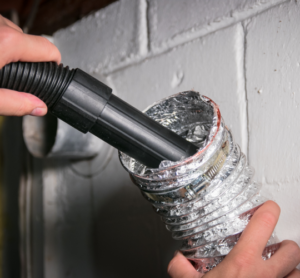 Air duct cleaning matters everywhere, but it matters more in Memphis and the surrounding Mid-South than it does in most of the country. That is not a marketing claim. It is a direct consequence of the regional climate, the local pollen environment, and the way homes in this area are built and used.
 A
A